· 7 min read
How Halloween Crossed the Atlantic
Founder of Cogletta
When we think of Halloween today, we tend to picture round, grinning orange pumpkins. The Ghost Turnip at the National Museum of Ireland offers a very different face. Its hollow eyes, twisted mouth and uneven teeth are more unsettling than cheerful. The object on display is a painted plaster model, made by museum artist Eileen Barnes to preserve the appearance of a lantern once carved from a turnip. In 1943, a schoolteacher from County Donegal, Rois Ní Braonáin, brought the tradition to the museum's attention, explaining that such lanterns had been familiar in her area around 1900.
The contrast with the bright pumpkins outside American homes is striking. How did an old Irish custom become one of the most recognisable symbols of an American holiday? And how much of Halloween's earlier life survives in the celebration we know today?
Before Halloween Had a Name
Long before Halloween acquired its modern name, the end of October marked a change in the year. In Ireland and other parts of the Celtic world, Samhain was associated with the end of summer and the beginning of winter. The harvest was coming to a close. The shorter days brought the colder, darker months, when food, shelter and the next season's prospects mattered greatly.
Samhain also came to be associated with the supernatural. In Irish folklore, this was a time when the usual boundaries between the living and the dead were thought to be less certain. Spirits might return, and people took precautions against unwelcome visitors. Yet the surviving evidence does not give us a complete picture of what people did in the distant pre-Christian past. It would be misleading to imagine that every familiar Halloween custom, including the carved turnip, already existed in ancient Celtic times.
Christian observances added another layer. November 1 became All Saints' Day, and November 2 was associated with prayers for the dead on All Souls' Day. The evening before All Saints' Day was known as All Hallows' Eve, from which the word Halloween developed. Older seasonal customs and Christian practices existed alongside one another, but their relationship was neither simple nor uniform. There is no need to make Samhain and modern Halloween into a single, unbroken tradition to recognise the connections between them.
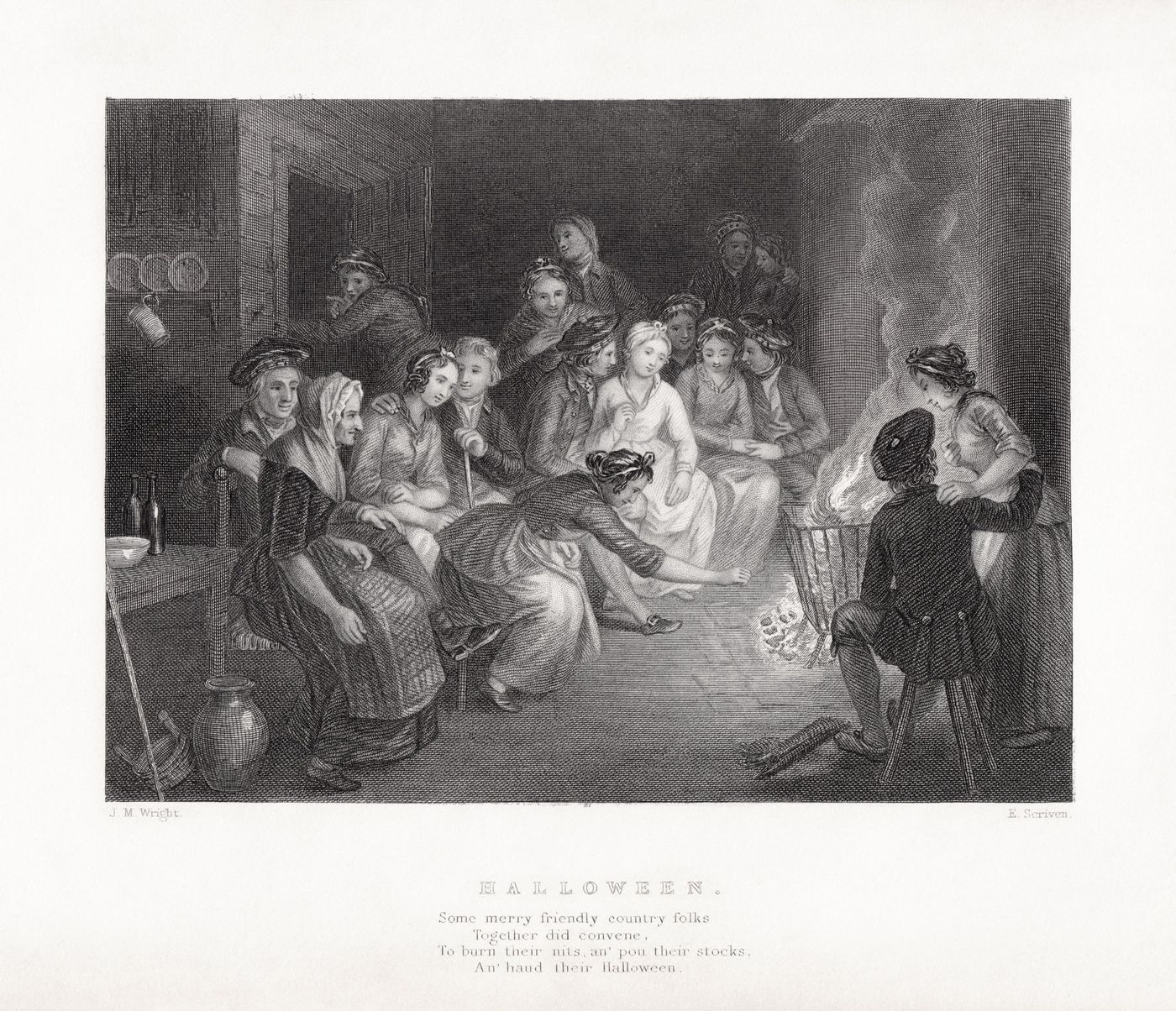
By the eighteenth century, we can see Halloween customs much more clearly. In his 1785 poem Halloween, the Scottish poet Robert Burns describes country people gathering for games and attempts to predict the future. Young men and women pull plants, burn nuts and look for clues about whom they might marry. Burns writes of neighbours coming together:
Some merry, friendly, countra-folks / Together did convene— Robert Burns, Halloween (1785), stanza 2
There are fairies and supernatural beliefs in the poem, but there is also laughter, flirtation and curiosity about the future. Halloween was not simply a night to fear the dead. It was an occasion for people to meet, play games and share old beliefs.
Some of these customs would cross the Atlantic with the people who practised them.
Crossing the Atlantic
Halloween did not arrive in North America all at once. Some English settlers had already brought seasonal games, stories and customs to the colonies, although Halloween itself was not widely celebrated there. In her 1919 book The Book of Hallowe'en, Ruth Edna Kelley noted that certain older activities, such as games with apples and attempts to discover a future partner, had persisted in colonial America.
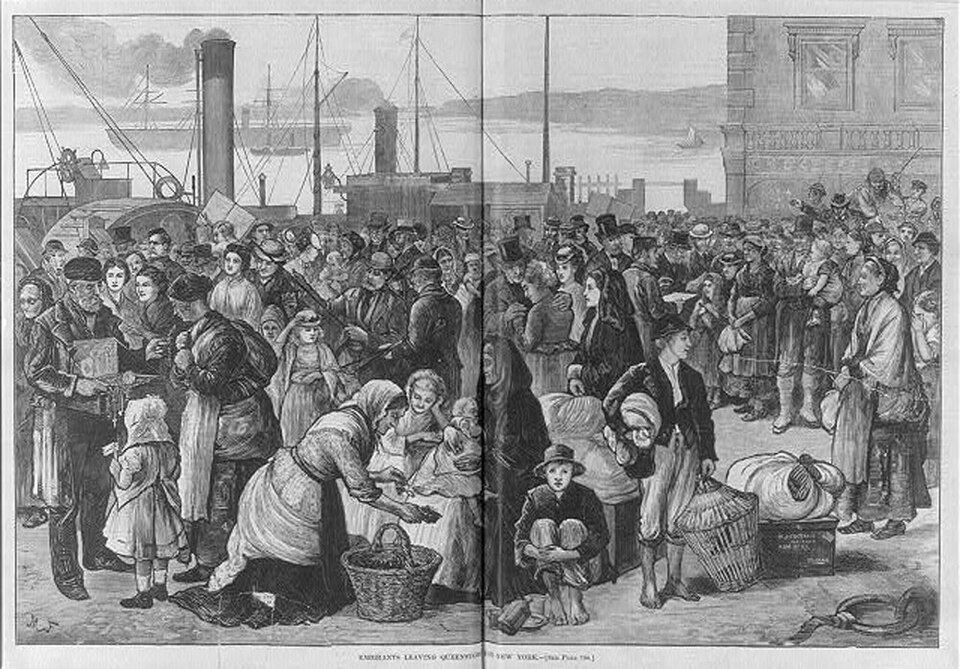
The larger change came through immigration, especially during the nineteenth century. Irish and Scottish newcomers carried their own customs into towns and cities across North America. They brought familiar ways of marking the end of October: visiting neighbours, telling ghost stories, playing fortune-telling games and gathering with friends.
For many Irish families, the journey was not simply a search for new opportunities. The Great Famine, beginning in 1845, brought widespread hunger, death and displacement. Large numbers left Ireland in the following years, many travelling to the United States and Canada. What they carried was not limited to the possessions they could pack. Festivals, songs and familiar household customs remained part of life even after they had left home.
Loading the rest of the essay…